

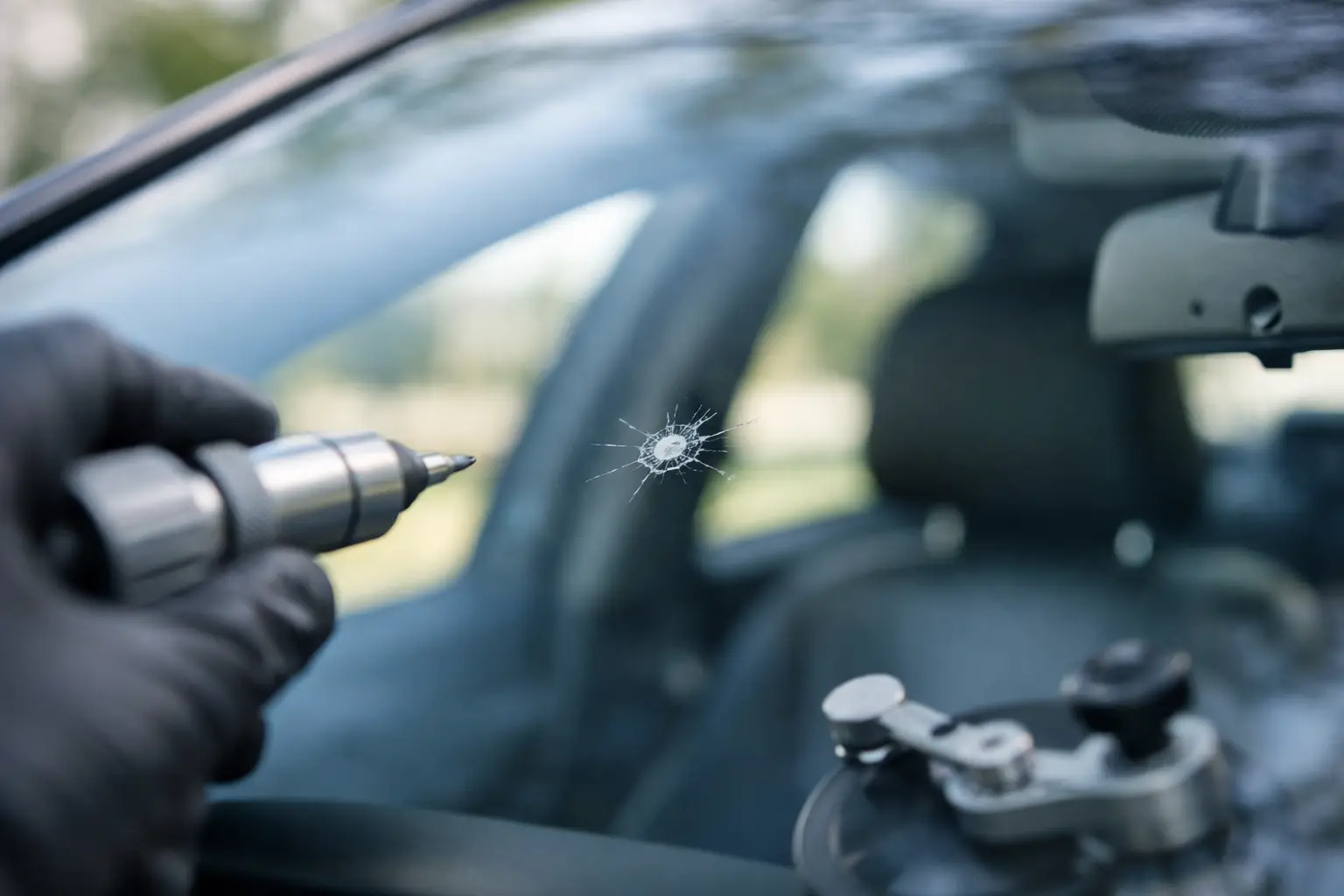
A rock chip can look minor when it first appears - often no bigger than a pea and easy to ignore during a busy week. But when should windshield chips be repaired? For most drivers, the answer is as soon as possible. Heat, cold, vibration, road bumps, moisture, and even a hard door slam can turn a repairable chip into a long crack that requires a full windshield replacement.
For Dallas-Fort Worth drivers, waiting can be especially risky. A windshield that sits in direct Texas sun, then gets hit with strong air conditioning, experiences a fast temperature change that puts pressure on damaged glass. Prompt mobile windshield repair protects your view of the road, helps preserve the strength of the windshield, and may cost less than replacing the entire glass.
When Should Windshield Chips Be Repaired? Right Away
The best time to repair a windshield chip is before it spreads. Glass repair works by injecting a specialized resin into the damaged area, then curing it to stabilize the glass. The process can restore structural support and make the chip much less noticeable, but it works best while the damage is clean, contained, and small.
A chip should be inspected promptly, ideally within a few days. You do not necessarily need to pull over and arrange service at that exact moment, but it is not a repair to put off for weeks. The longer a chip remains exposed, the more likely dirt and water will work their way into it. Contaminants can limit how clear the finished repair looks and make the damage harder to stabilize.
If the chip develops even a short crack, schedule service immediately. Cracks tend to grow at the ends, and there is no reliable way to predict when a small line will become a crack across the driver’s field of view.
Chips That Are Often Good Candidates for Repair
A trained auto glass technician makes the final call, but many small chips can be repaired when they meet a few practical conditions. Size matters. Damage roughly smaller than a quarter, with cracks shorter than several inches, is commonly repairable. A compact bullseye, star break, combination break, or small surface pit may all qualify depending on the depth and location.
The chip’s location matters just as much as its size. Damage away from the edges of the windshield is generally easier to repair because the glass has more support there. A chip that does not interfere with the driver’s direct line of sight also has a better chance of being repaired instead of replaced.
Repairs are not meant to make every mark disappear completely. In many cases, a small blemish remains visible after the resin cures. The goal is to stop spreading, reinforce the damaged area, and improve the appearance as much as possible. That is a worthwhile trade-off when the alternative is a growing crack and a more expensive replacement.
Repair May Not Be the Safest Option When
Some windshield damage calls for replacement, even if it initially looks small. A technician may recommend new glass if the chip is directly in the driver’s primary viewing area, if there are multiple cracks spreading from the impact point, or if the damage reaches the windshield edge. Edge cracks can weaken the glass more quickly because the perimeter is already under stress from the vehicle frame.
Replacement is also more likely when damage is deep enough to affect the inner layer of laminated glass, when the windshield has been repaired in the same spot before, or when a crack is too long to stabilize reliably. Modern vehicles may also have cameras and safety systems mounted near the windshield. If replacement is needed, those systems may require calibration to keep features such as lane assistance and forward-collision warnings working correctly.
The right decision is not always about choosing the least expensive service today. It is about choosing the service that keeps the vehicle safe and avoids paying for a repair that cannot last.
What Makes a Windshield Chip Spread?
Windshield glass is built from layers, but it is still under constant stress while you drive. The chip itself creates a weak point. Everyday conditions can push that weak point into a crack.
Temperature swings are a major culprit. Parking outdoors in North Texas heat, then blasting cold air onto the windshield, can cause the glass to expand and contract unevenly. Winter cold fronts can create the same problem in reverse when the defroster sends hot air toward a cold windshield.
Road vibration also plays a role. Potholes, uneven construction zones, railroad crossings, and rough parking lots all flex the vehicle slightly. A chip may remain unchanged through several drives, then spread after one sharp bump. Moisture makes matters worse because water can enter the damage, freeze during cold weather, expand, and push the layers apart.
Do not pour hot water on an icy windshield or use an aggressive scraper around a chip. Avoid washing the damaged area with high-pressure water if you can. These steps will not guarantee the chip stays stable, but they reduce unnecessary stress before a technician can inspect it.
What to Do Until Your Windshield Is Repaired
If you cannot arrange windshield chip repair immediately, keep the damaged area clean and dry. A small piece of clear tape placed gently over the chip can help keep out dust and moisture. Do not press the tape into the break, and do not use household glues, nail polish, or a DIY filler product unless you have decided to handle the repair yourself. Improper materials can contaminate the chip and make professional repair less effective.
Drive carefully and avoid sudden temperature changes when possible. Park in a garage or shaded area if available, and do not aim the defroster or air conditioning vents directly at the damage for long periods. These are temporary precautions, not a substitute for repair.
If the crack begins extending while you are driving, treat it as a reason to schedule an inspection right away. A spreading crack can reduce visibility quickly, especially at night or in rain when headlights and reflections make damaged glass more distracting.
Why Mobile Repair Makes Sense for Busy DFW Drivers
Many drivers delay glass service because they cannot spare time for a shop visit. That is exactly when mobile auto glass service can help. A technician can inspect and repair qualifying windshield chips at your home, office, or another safe location, so you do not have to rearrange your workday around a small chip that could become a major problem.
For commuters, parents, rideshare drivers, and field professionals in Dallas, Addison, Richardson, Fort Worth, and Irving, convenience is more than a perk. It can be the difference between getting the chip repaired while it is still eligible and needing a full replacement after it spreads.
Mid Cities Auto Glass provides mobile windshield repair and replacement for drivers who need a practical, timely solution. An inspection can clarify whether the chip is still repairable and what the safest next step looks like for your vehicle.
Common Questions About Windshield Chip Repair
Can I drive with a small windshield chip?
Usually, you can drive a short distance with a small chip, but it is not wise to ignore it. The chip may spread without warning, particularly after a temperature change or road impact. If it is in your line of sight or already has cracks coming off it, get it inspected promptly.
Will insurance cover windshield chip repair?
Many comprehensive auto insurance policies cover windshield repair, sometimes with little or no deductible. Coverage varies by carrier and policy, so check your specific details. Even when paying out of pocket, a simple repair is often less costly than replacing a windshield after the damage spreads.
How long does windshield chip repair take?
Many straightforward chip repairs can be completed in about 30 minutes, though the exact time depends on the type, age, and condition of the damage. If the chip is dirty, deep, or more complex, an inspection may take longer and replacement could be recommended.
A windshield chip is one of those vehicle problems that gets easier and less expensive when handled early. Cover it if needed, avoid temperature shock, and arrange an inspection before the next hot afternoon, cold front, or rough stretch of road turns a small impact into a larger interruption.