
A power window that drops crookedly, moves inch by inch, or refuses to close before a Texas rainstorm is more than an inconvenience. It can leave your vehicle exposed to weather, theft, and road noise. So, what causes car window regulator failure? Usually, the problem comes down to worn moving parts, a strained motor, damaged cables, or glass that is no longer traveling smoothly in its track.
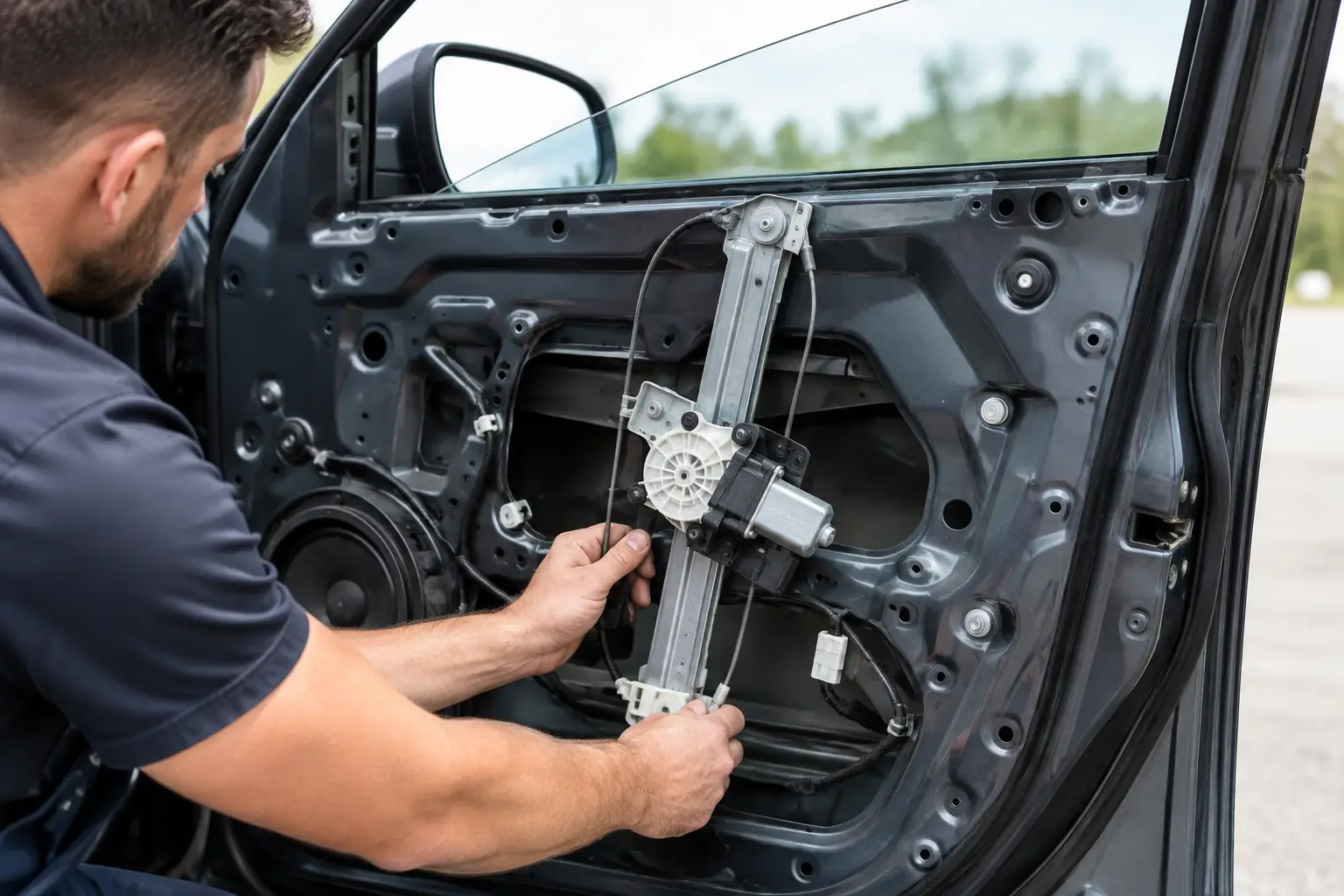
The window regulator is the mechanical assembly inside the door that raises and lowers the glass. In many vehicles, it works with an electric motor, cables, pulleys, and a sliding carrier. When one part binds, frays, wears out, or loses alignment, the entire window system can stop working as it should.
What Causes Car Window Regulator Failure Most Often?
Window regulators work every time you press the switch, often for years without attention. But they live inside a door that deals with vibration, moisture, heat, dust, and repeated use. A failure can be sudden, yet the underlying wear commonly builds over time.
Worn or broken cables and pulleys
Cable-driven regulators are common in modern vehicles. A steel cable runs through small pulleys to pull the window up and down. Over time, the cable can fray, stretch, tangle, or snap. The plastic pulley guides can also crack or wear down.
When this happens, you may hear a crunching, clicking, or grinding sound inside the door. The glass may tilt forward or backward, move unevenly, or fall into the door. In some cases, the motor still runs normally, but the window does not move because the regulator can no longer support the glass.
A failing window motor
The motor supplies the power, while the regulator transfers that power to the glass. Motors can weaken from age, excessive resistance, electrical problems, or frequent operation under strain. A tired motor may make the window move very slowly, especially on the way up.
A silent window does not automatically mean the regulator is broken. It could be a failed motor, fuse, switch, wiring issue, or regulator. Proper diagnosis matters because replacing the wrong part adds cost without solving the problem.
Misaligned glass or damaged window tracks
The glass needs to slide through rubber-lined channels at the top and sides of the door. If a guide comes loose, the track bends, or the glass gets out of alignment, the regulator has to work much harder. That extra resistance can damage a cable, strip internal regulator components, or overwork the motor.
A window that leans, scrapes, or needs to be pulled by hand is a strong sign that something is out of alignment. Avoid forcing it repeatedly. A window may close once with enough pressure, but that can turn a minor track issue into a broken regulator assembly.
Dry, dirty, or deteriorated window channels
North Texas heat can be hard on rubber seals and window channels. Rubber dries out, debris collects in the channels, and dust can create drag against the glass. Water intrusion can also wash dirt into the door and contribute to corrosion on metal parts.
This does not mean every slow window needs a regulator. Sometimes cleaning the channels and correcting the alignment restores smoother movement. If the regulator has already been strained for too long, though, worn cables or guides may still need replacement.
Repeated use and normal wear
Driver-side windows generally fail more often because they get the most use. Daily drive-through stops, parking garages, school pickup lines, toll booths, and quick conversations all add cycles to the same mechanism.
Wear is not always preventable. The regulator contains moving parts, and eventually those parts can reach the end of their service life. Still, responding to slow movement or unusual noises early can sometimes prevent the window from becoming stuck fully open.
Door damage or impact
A slammed door does not usually destroy a healthy regulator on the spot, but repeated hard slamming can worsen an already loose or worn component. A side impact, attempted break-in, collision, or damage from a broken side window can bend the tracks and knock the glass out of position.
After a break-in, the door may contain loose glass fragments that interfere with the window channel or regulator. The replacement glass needs to be installed and aligned correctly so it seals and moves properly. If the window starts binding after glass damage, it is worth having both the glass and operating mechanism checked.
Signs Your Window Regulator May Be Failing
The earliest warning signs are easy to overlook because the window may still work sometimes. Pay attention if the glass moves slower than usual, pauses midway, makes clicking or grinding noises, or needs several presses of the switch to respond.
A regulator issue becomes more likely when the glass moves crookedly, slips down after reaching the top, or drops suddenly into the door. You may also hear the motor running while the glass stays in place. That often points to a disconnected or broken regulator cable, carrier, or guide.
If the window will not go up, protect the vehicle as soon as possible. Do not leave a vehicle with an open window unattended, particularly if rain is expected. Moisture can reach the interior, electronics, door panel, and upholstery. A temporary covering may help for a short time, but it is not a substitute for a secure repair.
Can You Prevent Window Regulator Problems?
You cannot eliminate normal wear, but a few habits reduce unnecessary strain. Keep the window channels free of visible dirt and leaves, especially after storms. If you notice the glass rubbing, leaning, or slowing down, have it inspected before the motor or cable is forced to work harder.
Avoid holding the window switch after the glass has fully closed or opened. Most vehicles are designed to handle normal use, but repeatedly pressing a binding window can overheat the motor and worsen the damage. Be careful after a freeze as well. If glass is stuck to weatherstripping, forcing the switch can put heavy stress on the regulator.
If you have recently replaced a side window, check that it closes evenly against the weatherstrip and does not make new noises. A properly installed window should travel smoothly and sit securely at the top of the frame.
Regulator Repair or Replacement: What Should You Expect?
The right repair depends on which component failed and how much damage occurred inside the door. A technician may find a worn regulator, a weak motor, a damaged track, loose mounting hardware, broken glass, or a combination of these issues. Some vehicles use a motor and regulator as separate parts; others use an assembly that is replaced together.
Repair is often more practical than trying to rebuild individual cables or pulleys. Those small components may be difficult to source, and a partially repaired assembly may not provide reliable long-term operation. On the other hand, if the motor and regulator are sound and the problem is limited to glass alignment or debris in the channel, a full assembly replacement may not be necessary.
The door panel usually must be removed to inspect the mechanism. That gives the technician a chance to check the glass clamps, vapor barrier, tracks, wiring, and seals along with the regulator. A complete inspection is especially useful when the failure followed a break-in or shattered side window.
For drivers in Dallas, Addison, Richardson, Irving, or Fort Worth, mobile car window service can save a trip to a shop when the window is stuck down or the glass is damaged. Mid Cities Auto Glass can help assess side-window damage and restore the security and weather protection your vehicle needs.
When to Schedule Service Right Away
Schedule service promptly if the window is stuck open, the glass has fallen into the door, or you see cracked or shattered side glass. These problems affect vehicle security and can allow rain, dust, and debris into the cabin.
A window that is merely slow can often wait for a convenient appointment, but do not ignore it for months. The difference between a noisy window and a failed window is often one more trip through the drive-through or one unexpected rainstorm. Getting the mechanism checked while it still moves may give you more options and less disruption.