
A smashed side window at 9 p.m. creates two problems fast - your car is exposed, and most glass shops are closed. If you are wondering how to secure broken car glass overnight, the goal is simple: keep weather out, reduce theft risk, and avoid making the damage worse before a proper repair.
The good news is that a temporary fix does not need to be complicated. The bad news is that some quick fixes people try, like packing tape straight over shattered edges or driving with loose plastic flapping against the paint, can create a bigger mess by morning. A clean, tight temporary cover is what you want.
How to secure broken car glass overnight without making it worse
Start by deciding whether the vehicle is safe to handle where it sits. If the break happened on a busy street, in a dark lot, or after an attempted break-in, your first move is not the plastic sheet - it is getting yourself somewhere safer. If the car can be moved, park it in a well-lit area, ideally a garage or close to a building entrance with cameras.
Before touching the broken window, put on work gloves if you have them. Tempered side glass usually breaks into small cubes, but those pieces still cut skin and get everywhere. If the windshield is damaged instead, the approach changes a bit because laminated glass often stays in place even when cracked. In that case, the main issue may be visibility rather than an open hole.
If glass is actively falling from the frame, remove the loose pieces carefully from the window channel and the seat area. You do not need to dig out every tiny fragment tonight. What matters is getting rid of anything unstable that could drop later or tear your temporary covering.
What you need for an overnight car window cover
The best temporary setup is usually clear plastic and painter's tape or masking tape. A heavy-duty trash bag can work if that is all you have, but thicker plastic sheeting holds up better against wind and rain. Clear plastic is better than dark plastic if you may need to move the car in daylight before repair.
Try to gather a few basic items: gloves, a small brush or vacuum, microfiber towels or paper towels, painter's tape, and a piece of plastic larger than the window opening. If rain is expected in Dallas, Irving, or Fort Worth overnight, it is worth taking an extra few minutes to dry the window frame before taping anything down. Tape sticks poorly to wet rubber and dusty paint.
Skip duct tape if possible. It seems stronger, but it can leave stubborn residue on paint and trim, especially in Texas heat. Painter's tape is less aggressive and usually easier to remove once mobile auto glass service arrives.
Clean the area first
Brush away loose glass from the door frame, window seal, and nearby seats. If you have a vacuum, use it lightly around the window track and floorboard. Then wipe the painted surface and trim where the tape will attach. Dirt and moisture are the main reasons temporary covers peel off overnight.
Tape from the outside when you can
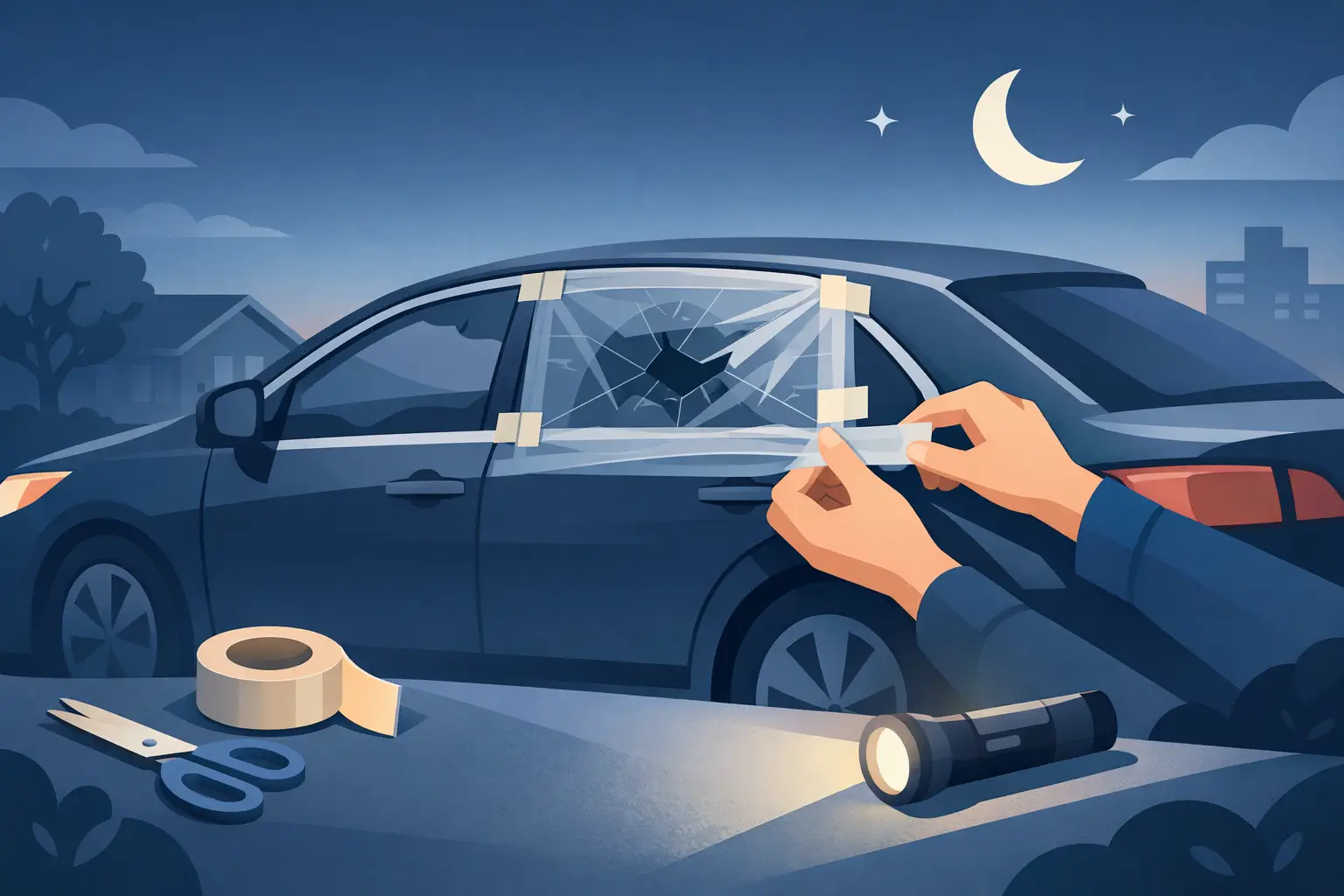
For a broken side window, the most effective temporary cover is usually applied from the outside of the vehicle. That keeps rain from blowing into the cabin and uses the door frame itself to support the plastic. Cut the plastic so it extends at least two inches past the window opening on all sides.
Tape the top edge first, then pull the plastic taut before securing the sides and bottom. Use overlapping strips of tape rather than one long piece at each edge. That gives you a better seal and makes it less likely the whole cover will peel away if one section loosens.
Add an inside layer only if needed
If the weather is rough or the outside surface will not hold tape well, add a second layer from inside the vehicle. This is helpful when the rubber seal is uneven or the frame still has small jagged points. The inside layer does not replace the outside one. It just adds support and helps catch moisture if the outer seal is not perfect.
What not to do when securing broken car glass overnight
Do not tape directly over sharp glass still stuck in the frame unless you have no other option. Tape can pull loose fragments down later, sometimes into the door channel where cleanup gets harder. Remove unstable pieces first.
Do not slam the door once the window is covered. The pressure change can pop your temporary patch loose, especially if only one layer of tape is holding it. Close the door gently and recheck the edges.
Do not leave valuables inside. Even a well-taped window is still a temporary barrier, not security. If the break was caused by theft or vandalism, assume the vehicle is more vulnerable until the glass is replaced.
And if the windshield is the damaged glass, do not assume a strip of tape makes the car safe to drive. Windshield damage affects visibility and the structural integrity of the vehicle. A cracked windshield can spread overnight from temperature changes alone, especially after a hot day and a cooler night.
If the weather is bad, your priorities change
Rain shifts this from a security problem to an interior damage problem. Water soaking into seats, carpet, door panels, and electronics can cost more than the glass itself. If storms are coming, prioritize a tight seal and consider using absorbent towels along the inside bottom edge of the door to catch any drip that gets through.
If hail or strong wind is expected, a temporary cover may not hold well enough outdoors. In that case, the smartest move is often relocating the car to covered parking, even if that means leaving it overnight with a friend, at work, or in a garage. It depends on the size of the opening and the weather forecast, but exposure is the real enemy here.
Cold is less common in the DFW area than heat, but big temperature swings still matter. Adhesives can loosen, and cracked glass can spread. Check the cover again before bed and once more early in the morning if the vehicle is parked outside.
When you should not wait until morning
Some broken glass can safely be secured overnight. Some cannot. If the driver's side glass is shattered and visibility is compromised, if glass is falling into the cabin, or if the windshield damage blocks your line of sight, do not treat it as a simple overnight patch job.
The same goes for repeated break-ins or damage that leaves the door unable to close properly. In those situations, temporary covering is only one part of the problem. You may need immediate help, a safer parking location, or a tow rather than trying to make the car work until the next day.
For commuters, families, and rideshare drivers, downtime matters. That is why mobile auto glass service is often the fastest next step after the overnight fix. Instead of driving across town with plastic on your window, you can have the repair or replacement handled where the vehicle is parked.
The morning after: what to do next
Once daylight hits, inspect the area before driving. Make sure the tape is still secure, no loose glass is hanging from the frame, and moisture has not soaked into the interior. If the temporary cover blocked your mirror or side visibility, avoid driving until that is corrected.
Take a few photos of the damage if you have not already, especially if insurance may be involved. Then arrange for repair as soon as possible. Side window damage usually calls for replacement, while some windshield chips and cracks may still be repairable depending on size, depth, and location.
If you are in the DFW area and need the problem handled quickly, a mobile provider like Mid Cities Auto Glass can come out to your home, office, or parking garage so you do not lose half your day waiting at a shop. That matters when the car is already exposed and you just need it fixed.
A temporary cover can get you through one night, maybe a little longer if conditions are mild. But the best overnight plan is still a short one: protect the opening, protect the interior, and line up a proper repair before the next storm, commute, or security concern shows up.