
A windshield chip can look minor when it first happens, especially after a highway drive around Dallas or Fort Worth. Then a temperature change, a pothole, or normal road vibration turns that small mark into a spreading crack. If you need an estimate, plan to file insurance, or simply want a repair professional to assess the glass, knowing how to document windshield damage gives you a clear record before the problem changes.
Good documentation takes only a few minutes. The goal is not to diagnose the damage yourself. It is to capture what happened, where the damage is located, how large it appears, and whether it is affecting safe driving.
Start Before You Clean or Cover the Damage
Take photos as soon as you can after noticing the chip or crack. Do this before applying tape, resin, a windshield patch, or cleaning products. Those steps can be useful for protecting the area, but the first set of photos should show the windshield in its original condition.
Park in a safe, well-lit area. Natural daylight is usually best, but avoid direct glare across the glass when possible. If you are documenting damage at night, use overhead lighting and your phone's flash only when it helps reveal the crack. Flash can create reflections that hide the actual damage.
If the windshield is dirty, take one quick photo first, then gently remove loose dirt around the affected area with a clean, dry microfiber cloth. Do not press on a chip, scrape at broken glass, or spray liquid directly into the damage. Moisture and debris can make a repair more difficult.
How to Document Windshield Damage With Photos
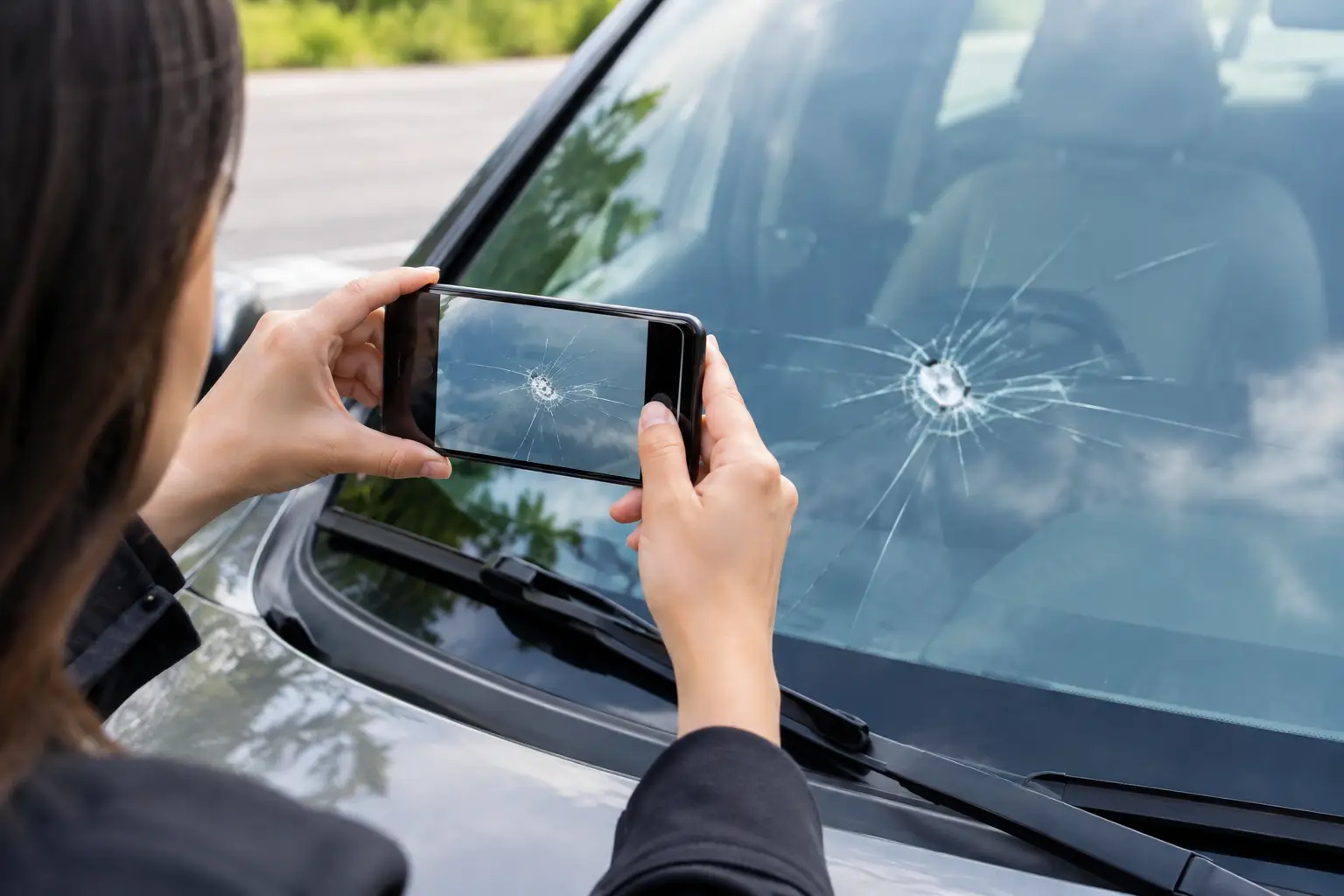
Use your phone camera and take more than one type of image. A single close-up rarely gives an insurance adjuster or auto glass technician enough context. You want photos that show both the detail of the damage and its position on the vehicle.
Start with a wide photo from several feet away. Capture the full windshield and enough of the hood or roofline to make it clear which vehicle the glass belongs to. Then take a medium-distance photo that shows the damage in relation to the driver's side, passenger side, or center of the windshield.
Next, take close-up photos from inside and outside the vehicle. Hold your camera steady, tap the screen to focus on the chip or crack, and take several angles. A close-up should make the shape of the break visible, whether it is a bull's-eye chip, star break, combination break, or a long crack.
Place a common object near the damage for scale, such as a quarter, ruler, or tape measure. Do not place anything sharp against the glass or use adhesive near the damaged area. The scale photo helps show whether a chip may qualify for repair or whether the crack has extended beyond a practical repair size.
Take a photo from the driver's seat as well. This matters when the crack crosses the primary viewing area or creates glare that affects visibility. A small chip near the edge of the windshield can also be more serious than it looks because edge damage may spread quickly.
For a useful photo set, capture these four views:
- A wide exterior view of the complete windshield
- A medium view showing the damage location
- Close-ups from inside and outside the vehicle
- A scale photo using a quarter or ruler
Avoid filters, portrait mode, or edited images. Keep the original photos on your phone until the claim and repair process are complete. Original files often retain date, time, and location information that can support your notes.
Record a Short Video if the Crack Is Hard to Photograph
A 10- to 20-second video can help when reflections make a crack difficult to see in a still image. Start with the full windshield, move slowly toward the damaged spot, and show the crack from a couple of angles. Keep the video steady and do not narrate while driving or record from an unsafe position.
Video is especially helpful for long cracks that branch across the windshield. It can show the full path of the damage more clearly than separate photos.
Write Down What Happened While It Is Fresh
Photos show the condition of the glass. Your notes provide the timeline. Open a note on your phone and record the date and approximate time you noticed the damage, where you were, and what you believe caused it.
For example, you might write that a rock struck the windshield while driving on a highway, or that you found a crack after your vehicle was parked overnight. If you did not see the event, say that. Do not guess or add details you cannot verify.
Include the vehicle year, make, model, and license plate number or VIN if you are submitting an insurance claim. Note whether the damage has changed since you first saw it. A chip that became a six-inch crack after a hot afternoon is useful information for both the insurer and the glass technician.
Also record any driving concerns. Mention if the crack is in your direct line of sight, reaches the windshield edge, blocks a camera or sensor, or causes distracting glare. Modern vehicles may have advanced driver-assistance systems mounted near the windshield. If replacement is needed, those systems may require calibration after the new glass is installed.
Save Information That Supports an Insurance Claim
If you plan to use comprehensive coverage, check your policy before authorizing work. Windshield coverage, deductibles, preferred provider rules, and claim steps vary by insurer. Some policies cover repair differently from replacement, and a repair may be less expensive than paying a replacement deductible.
Keep the claim number once you receive it. Save the name of the representative, the date you called, and any instructions about inspection or repair approval. If another vehicle caused the damage, document its plate number, driver information, and any incident report if one was created.
You do not need an insurance claim for every chip. If the damage is small and your deductible is high, paying directly for a repair may make more sense. A qualified auto glass professional can help determine whether repair is still possible, but the final choice depends on the damage, your vehicle, and your coverage.
Document Any Changes Before Your Appointment
Windshield damage can spread fast in North Texas heat, especially when the glass goes from a hot parking lot to air conditioning. Take another photo if the crack grows, branches, or reaches the edge of the windshield before your appointment.
Try to avoid slamming doors, running the defroster at high heat, or blasting cold air directly onto damaged glass. These changes in pressure and temperature can cause existing cracks to extend. If you must drive, give yourself extra following distance and avoid rough roads where practical.
A clear piece of windshield repair tape can protect a small chip from moisture and dirt if you have it, but only after you have taken your initial photos. Do not use household tape that leaves residue, and do not attempt a do-it-yourself resin repair if you are planning to have the damage professionally evaluated right away. A failed DIY attempt can limit repair options.
Know When Documentation Should Be Followed by Immediate Service
Documentation is helpful, but it should not delay necessary service. Arrange prompt windshield repair or replacement when the crack interferes with your view, damage is directly in front of the driver, glass is visibly loose, or the windshield has multiple cracks. You should also act quickly when a chip reaches the outer edge or the damage is growing from day to day.
If your vehicle has windshield-mounted cameras or sensors, tell the glass company when you request an estimate. This helps them confirm the correct glass and explain whether calibration may be needed after replacement. A mobile appointment can be a practical option when the vehicle is not safe or convenient to drive across town.
For drivers in Dallas, Addison, Richardson, Irving, or Fort Worth, Mid Cities Auto Glass can review the photos you took and bring mobile auto glass service to your location. Clear images and a few accurate notes help the technician arrive prepared for the right repair or replacement.
A chip will not wait for a convenient time to become a crack. Take the photos, save your notes, and get a professional opinion while the damage is still manageable.