
A windshield crack used to be mostly a visibility problem. On many newer vehicles, it can also affect the camera and sensors that support forward collision warnings, lane departure alerts, automatic emergency braking, and adaptive cruise control. That is why ADAS windshield replacement trends matter to drivers who need a safe, practical answer after glass damage - not just the fastest possible glass installation.
For Dallas-Fort Worth commuters, the issue often starts with a rock chip that spreads in summer heat, a crack caused by road debris, or damage after a storm. If the windshield has a camera mounted near the rearview mirror, replacement may require more than fitting new glass. The vehicle may need ADAS calibration afterward so its safety features can read the road correctly.
ADAS Windshield Replacement Trends Drivers Should Know
The biggest change is simple: windshield replacement has become more vehicle-specific. A windshield that looks similar to another one may have different camera brackets, heating elements, acoustic layers, rain sensors, heads-up display compatibility, or manufacturer-required calibration procedures. Choosing glass based on size alone is no longer enough.
More vehicles are arriving with advanced driver-assistance systems as standard equipment, not just premium upgrades. That means calibration is becoming a routine part of replacement work for a growing number of makes and models. A technician must identify the vehicle's features before ordering glass and before beginning the job.
Another trend is greater attention to documentation. Drivers, insurers, and repair professionals increasingly want confirmation that the correct windshield was installed and that calibration was completed when required. This is especially relevant after an accident claim or when a vehicle is used for rideshare, delivery work, or frequent business travel.
Calibration is not an optional extra
ADAS cameras are positioned to measure distance, lane markings, vehicles ahead, and other road conditions. Even a small change in the camera's position or viewing angle can affect how the system interprets what it sees. Removing and replacing the windshield can change that position enough that the manufacturer calls for calibration.
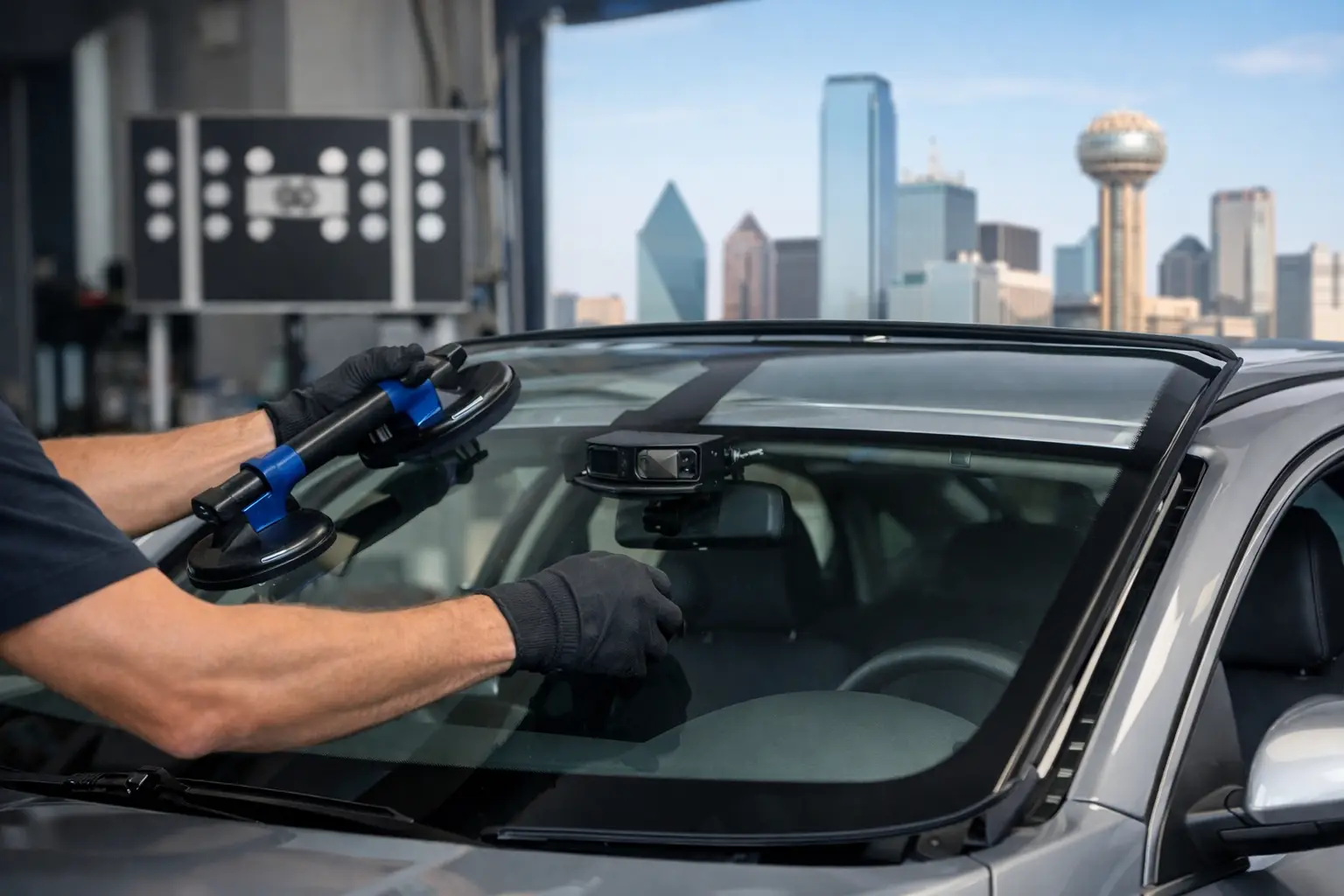
There are two common approaches. Static calibration uses targets placed at precise distances and heights in a controlled setting. Dynamic calibration uses a scan tool while the vehicle is driven under specific road and traffic conditions. Some vehicles require one method, while others require both. The right process depends on the vehicle manufacturer, model year, equipment package, and installed system.
A dashboard warning light is not the only reason to ask about calibration. In many cases, the vehicle may appear normal after replacement even when the camera needs to be recalibrated. The responsible question is not, “Is the warning light on?” It is, “What does the manufacturer require for this vehicle after windshield replacement?”
Mobile Service is Adapting to ADAS Requirements
Mobile windshield replacement remains a major convenience for drivers with packed schedules. A technician can come to a home, office, or other suitable location, which helps reduce downtime after a windshield is damaged. But ADAS has added a practical limitation: not every replacement and calibration can be handled under every parking-lot condition.
For example, static calibration may require level ground, adequate space, controlled lighting, and carefully positioned equipment. Heavy rain, poor lighting, a steep driveway, or a crowded area can make a proper setup difficult. Dynamic calibration also depends on road conditions and the vehicle's requirements.
This does not make mobile service less valuable. It means a good provider should be clear about what can be completed at your location and whether a calibration step needs a specific setting. For many DFW drivers, the best plan is still mobile replacement with a clearly arranged calibration process rather than losing an entire day at a shop.
The location of the damage still matters
A small chip can sometimes be repaired before it turns into a replacement job. Repair is generally worth considering when the damage is small, outside the driver's critical viewing area, and not directly interfering with a camera or sensor area. It can save time and may preserve the original factory windshield.
However, a long crack, damage at the windshield edge, multiple impact points, or damage near the camera area can change the recommendation. The vehicle's glass and ADAS layout should be inspected together. Waiting too long can turn a repairable chip into a larger crack, especially during North Texas temperature swings.
Glass Quality and Correct Fit Matter More Than Ever
One of the most meaningful ADAS windshield replacement trends is the focus on proper glass selection. Original equipment manufacturer glass, often called OEM glass, is made to the vehicle maker's specifications. Aftermarket glass is produced by other manufacturers and can be a reliable option when it meets the needed specifications. Neither choice should be reduced to a one-word answer.
The right windshield depends on the vehicle and its features. A driver with a basic windshield may have more options than someone with a front camera, rain sensor, heated wiper park area, acoustic interlayer, or heads-up display. The crucial issue is that the replacement glass has the correct provisions and that the camera bracket and related components are installed correctly.
Price matters, particularly when a cracked windshield arrives at an inconvenient time. Still, the lowest quote may not include all necessary parts, moldings, sensor transfers, calibration, or documentation. Ask what the quoted replacement includes. A clear estimate helps prevent the surprise of discovering later that a required calibration step was not part of the original price.
What to Ask Before Scheduling Replacement
You do not need to become an ADAS expert before calling for service. A few direct questions can help you schedule the right work and compare estimates fairly:
- Does my vehicle have a forward-facing camera or windshield-mounted sensors?
- Does the manufacturer require calibration after windshield replacement?
- Is calibration included in the estimate, and what type will be used?
- Will the replacement glass match features such as rain sensing, heating, acoustic glass, or heads-up display compatibility?
- Can the work be completed at my location, or does calibration require a controlled environment?
- Will I receive confirmation that the required calibration was completed?
It also helps to provide the vehicle year, make, model, trim level, and VIN when requested. Photos of the windshield damage and the area behind the rearview mirror can help identify camera and sensor equipment before the appointment. That preparation can reduce delays, especially when the correct windshield must be ordered.
Insurance, Safety, and the Cost Question
Comprehensive insurance may cover windshield replacement, subject to a deductible and policy terms. Coverage does not automatically answer every ADAS-related question, though. Drivers should confirm whether their claim estimate includes calibration if the manufacturer requires it. A replacement that restores the glass but overlooks a required safety-system procedure is not a complete repair.
Cost can vary because ADAS-equipped windshields involve more than glass. The vehicle may need a specific windshield part number, new moldings or clips, sensor preparation, camera calibration, and post-service verification. A basic replacement can cost less, while a feature-heavy windshield and required calibration can increase the total.
The trade-off is straightforward. Saving money on an incomplete job can create a bigger problem if driver-assistance features do not perform as intended. On the other hand, not every vehicle requires the same level of work. Accurate identification of the vehicle's equipment keeps customers from paying for unnecessary services or skipping necessary ones.
A Practical Plan After Windshield Damage
If a rock hits your windshield, take a photo of the damage and avoid slamming doors or blasting the defroster on a cracked area. If the crack is spreading, the damage is in your line of sight, or the windshield has a broken camera area, arrange an inspection promptly. Do not place tape or stickers over a camera housing unless a technician advises it.
When scheduling mobile auto glass service in Dallas, Addison, Richardson, Fort Worth, or Irving, tell the provider if your vehicle has lane-keeping, collision-warning, or adaptive cruise features. That one detail helps ensure the appointment is planned around the actual needs of your vehicle.
A clear windshield supports more than a better view of the road. When ADAS is involved, the right replacement process helps protect the systems designed to assist you on every commute, school run, and highway trip. If you are unsure whether your vehicle needs calibration, ask before the glass is installed - it is the simplest time to get the right answer.